
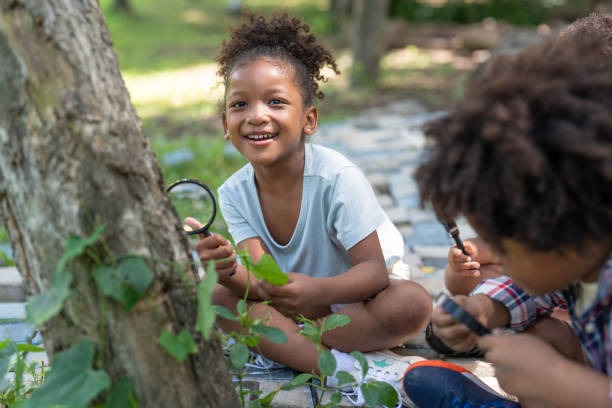
Let’s be honest, cleaning mud off a toddler after a good outdoor session is a commitment. But here’s a secret that makes all that scrubbing worthwhile: when your child is squatting to look at an ant, balancing on a log, or stirring a mud pie, their little brain is doing some serious high-level magic! Nature play isn’t just about getting fresh air; it’s the ultimate, multi-sensory fuel for a toddler’s development. If you want a deep dive into why the outdoors is so crucial for physical, emotional, and social growth, check out this great resource from the Children’s Hospital of Philadelphia (CHOP): The Benefits of Outdoor Play: Why It Matters
Brain Boost: Why Nature is the Best Teacher
Nature is the original, open-ended classroom. Unlike a plastic toy with one function, a stick, a rock, or a pile of leaves can be anything—and that unstructured freedom is exactly what the developing brain craves.
- Sensory Super-Power: Indoor environments are often predictable. Outdoors, your toddler’s seven senses (yes, seven!) are bombarded with new information: the smell of pine needles, the rough texture of bark, the sound of a chirping bird, the feel of uneven ground. This rich sensory input directly builds and strengthens neural pathways, which is critical for their cognitive and learning skills.
- The Problem-Solving Gym: Nature constantly presents “risks” and challenges that are safe and manageable. Can I climb that small hill? How can I get this water from the stream to my mud kitchen? Every time your child decides how high to step or how to balance on a curb, they are actively assessing risk and solving a spatial problem. This skill is called Executive Function, and it’s a massive predictor of school readiness.
The Guilt-Free Path to Resilience
Nature play also works wonders on your child’s emotional wiring. If you’ve ever felt calmer after a walk outside, you know the feeling. The same is true for toddlers!
- Stress Reduction: Studies show that spending time in green spaces is linked to lower levels of the stress hormone cortisol in children. Essentially, nature is a natural antidote to the overstimulation of modern life. They get to be loud, messy, and fully expressive without the usual indoor constraints.
- Building Resilience: When a toddler inevitably falls off a small log or their sandcastle gets washed away by a rogue wave, they learn resilience. They dust themselves off, figure out what went wrong, and try again. They learn to manage frustration and build a powerful sense of self-confidence (“I did that all by myself!”).
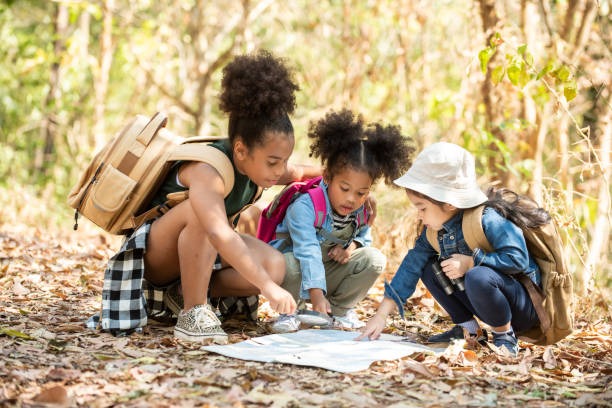
Simple Ways to Maximize Nature Play
You don’t need a national park! The benefits are there in your backyard, a neighborhood park, or even a grassy median:
- Follow the Child: Let them lead the adventure. If they are obsessed with one single rock, sit with them and explore that rock!
- Embrace the Mess: Bring back that old bucket and shovel for a “mud kitchen.” Allow for water, dirt, and leaves to be the main ingredients.
- Name Everything: Use rich language to describe what they are interacting with: “Look at that craggy bark!” or “That wind is gusting!”
Ready to see how our center brings nature play to life?
Schedule Your Tour at Golden Child Development Center North Carolina Today!
📍 Golden Child Development Center
🏠 Address: 1801 Spring Forest Rd, Raleigh, NC 27615
📞 Office: (919) 878-9927
📱 Cell: (919) 621-9186
📧 Email: goldenchild1801@gmail.com