
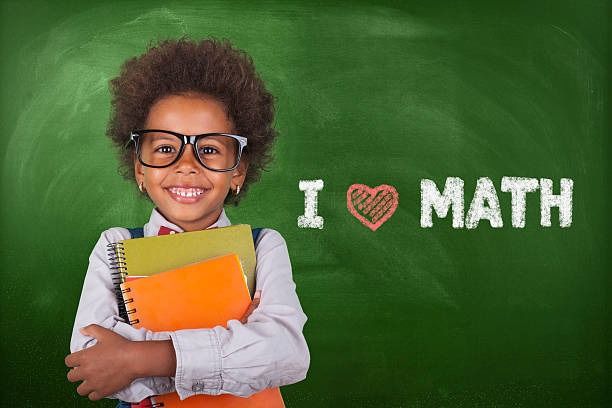
When you think of Pre-K, you probably think of story time, finger paint, and making friends. But guess what? Your child is secretly becoming a mathematical genius, and it’s all happening through play!
The math we teach preschoolers isn’t about memorizing flashcards; it’s about counting snacks, sorting toys, and noticing patterns in their favorite books. It’s making sense of the world. And here’s the most important takeaway: Early math skills are one of the strongest predictors of future academic success, outperforming early literacy in some studies! If you want to know more about how this foundation is built, check out this excellent resource from the NAEYC (National Association for the Education of Young Children): 5 Ways to Build Math into Your Child’s Day
Pre-K Math is Secretly Brain Training
Math in the early years is all about building skills that extend far beyond the classroom. These fun, hands-on activities are literally shaping the problem-solving centers of your child’s brain:
- Problem-Solving Power: When your child is trying to fit the last block on top of their tower without it crashing (spatial reasoning), or figuring out how to share five crackers fairly between two friends (division), they are tackling real-world math problems. This process develops critical thinking that they’ll use in every subject and job later in life.
- Pattern Recognition: When they notice that red, blue, red, blue is a repeating pattern, they aren’t just seeing colors. They are building the core skills needed for coding, algebra, and logical reasoning. Patterns are the language of math!
- Counting is Just the Start: Counting is great, but true Pre-K math is about one-to-one correspondence (knowing that the number “three” represents three specific objects). It’s the difference between reciting numbers and truly understanding quantity.
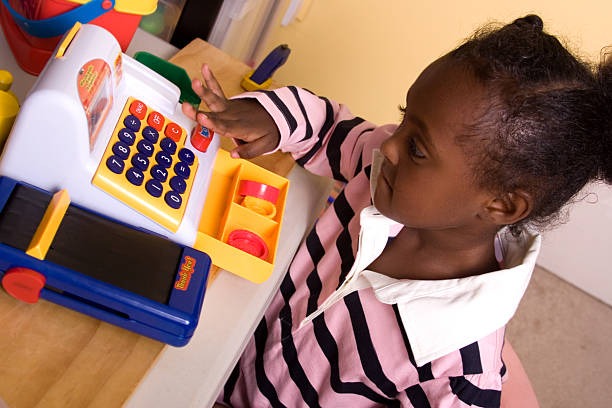
Three Easy Ways to Be a Math Genius at Home
You don’t need a textbook to foster these skills. You just need to talk about math concepts while you play!
- Be a Counter, Not Just a Reciter: Instead of just asking them to count to 10, ask them to count specific things by pointing and touching each object. “Can you count the blue cars? One, two, three cars!” This links the number word to the quantity.
- Shape Hunt: Turn a walk into a geometry lesson! Point out shapes everywhere: The stop sign is an octagon. The window is a rectangle. The pizza is a circle. Use rich vocabulary like “vertex,” “side,” and “curve.”
- Sort the World: Sorting toys by color, size, or type is classification—a huge math skill! Ask them to sort the laundry (big shirts vs. small shirts) or sort the silverware. You are teaching them to look for attributes and organize information.
Why Quality Pre-K Matters
The key to all this is making math hands-on, exploratory, and fun. A high-quality center understands that math readiness isn’t about rote memorization; it’s about play-based discovery. When children are encouraged to build, measure, estimate, and compare in a supportive environment, they develop a positive, confident attitude toward math that stays with them forever.
At Golden Child Development Center North Carolina, our curriculum is intentionally designed to integrate foundational math skills into every aspect of play. We ensure your child is developing the critical thinking, problem-solving, and numeracy skills needed for kindergarten and beyond, all while having fun!
Schedule Your Tour at Golden Child Development Center North Carolina Today!
📍 Golden Child Development Center
🏠 Address: 1801 Spring Forest Rd, Raleigh, NC 27615
📞 Office: (919) 878-9927
📱 Cell: (919) 621-9186
📧 Email: goldenchild1801@gmail.com