
Watching a toddler struggle to stack two blocks, or a preschooler take five tries to zip a jacket, can test any parent’s patience. But those small, fumbling movements are building fine motor skills your child will rely on for life.
These skills don’t need special equipment. Most of the best practice happens right in the middle of ordinary play.
What Are Fine Motor Skills, and Why Do They Matter
Fine motor skills involve the small muscles in the hands and fingers used for grasping and manipulating objects with control, laying the groundwork for holding a pencil, buttoning a shirt, and using scissors.
Strong fine motor development also supports independence. A child who can manage buttons and utensils on their own feels more capable throughout the day.
Everyday Play That Builds Fine Motor Strength
Building and stacking. Stacking blocks, connecting Magna-Tiles, or snapping LEGOs together strengthens the small hand muscles used for grip and control, while this kind of hands-on building play also introduces early math and engineering.
Puzzles and sorting games. Picking up puzzle pieces or sorting small objects by size and color requires precise finger control. These activities double as critical thinking practice too.
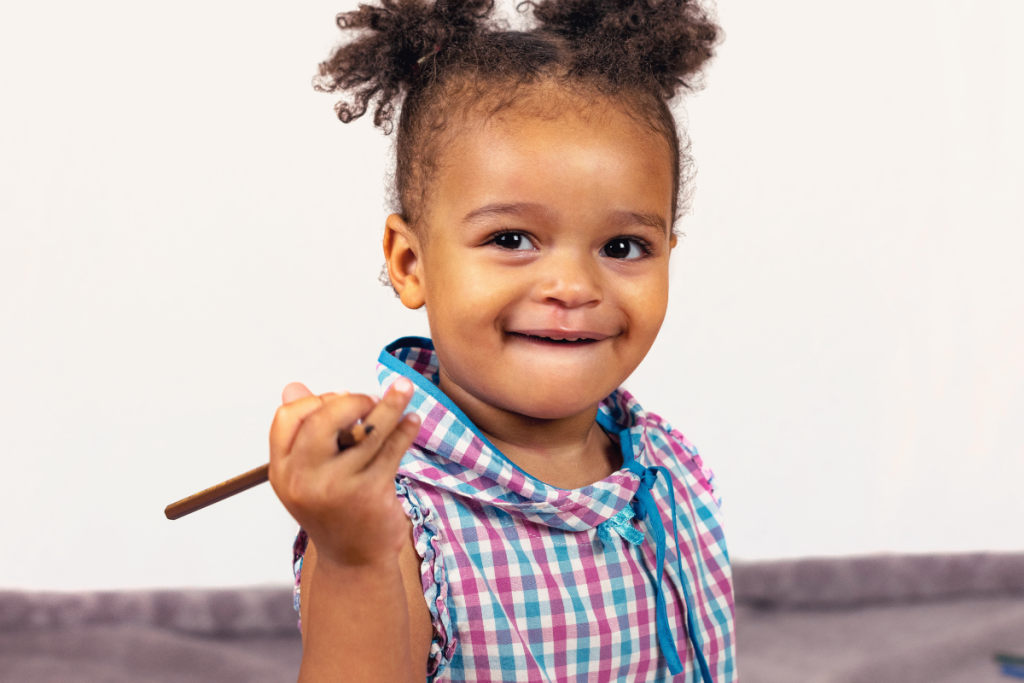
Art and craft materials. Squeezing a glue bottle, tearing paper, or gripping a crayon all build the same small muscles children later use for writing.
Kitchen helpers. Pouring, stirring, and tearing lettuce give children real practice with grip and coordination.
Simple Ways to Support Fine Motor Growth at Home
- Offer child-safe scissors and scrap paper for open-ended cutting practice.
- Let your child help with snack prep, like spreading butter or peeling a banana.
- Keep playdough or putty on hand for squeezing and pinching.
- Resist doing the task for them. The struggle is often where learning happens.
Every Child Develops These Skills on Their Own Timeline
Some children grip a crayon with ease early on, while others need more time before their pencil grasp feels comfortable. That range is normal, and pushing a child faster rarely helps.
FAQ
At what age should my child hold a pencil correctly?
Most children develop a more mature grip between ages three and five, though this varies and refines through early elementary years.
My toddler refuses utensils. Should I worry?
Not usually. Many toddlers prefer hands at first. Keep offering utensils without pressure, and the skill develops with time.
Key Takeaways
- Fine motor skills involve the small hand and finger muscles used for grasping objects.
- Building, puzzles, art, and helping in the kitchen build these skills naturally.
- Toys with buttons, zippers, and clasps support fine motor growth and independence.
- Every child develops fine motor control at their own pace.
Curious how these moments add up in our classrooms? Schedule a tour of Golden Child Development Center and see hands-on learning in action.
Golden Child Development Center
Address: 1801 Spring Forest Rd, Raleigh, NC 27615
Office: (919) 878-9927 Cell: (919) 621-9186
Email: goldenchild1801@gmail.com